Compilation (3)

SCYTALE CIPHER

Type: Transposition

> Suppose the rod allows one to write four letters around in a circle and five letters down the side of it. To decrypt, all one must do is wrap the leather strip around the rod and read across.

(Note: make a table and insert there your input, table is based on diameter)

Example message:

Plaintext: Hey i was doing just fine before i met you

Diameter: 7

H|E|Y| I|W|A|S

D|O| I|N|G|J|U

S|T|F| I|N|E|B

E|F|O|R|E| I|M

E|T|Y|O|U|

Ciphertext: HDSEEEOTFTYIFOY
INIROWGNEUAJEISUBM

ROTATION CODE

Type: Substitution

(Note: it’s formula forencryption is f(x)=(ax)mod26 and for decryption is f(y)=a^-1(y)mod

26, where x or y corresponds to the position of the letter in the alphabet, e.g. a=0, b=1, c=2…..z=25, mod26 correspond to the limit of the rotation, and a correspond to any input number)

Example: (encryption)

Plaintext: KING

F(x)=(ax)mod26

a=2
K=10, f(x)=(2*10)mod26=20
I =8, f(x)=(2*8)mod26=16=
N=13, f(x)=(2*13)mod26=26
G=6, f(x)=(2*6)mod26=12

K=20=U

I =16=Q

N=26=A

G=12=M

Ciphertext: UQAM

Example: (decryption)

Ciphertext: UQAM
F(y)=a^-1(y)mod26

a=2
U=20, f(y)=2^-1(20)mod26=10
Q=16, f(y)=2^-1(16)mod26=8
A=26, f(y)=2^-1(26)mod26=13
M=12, f(y)=2^-1(12)mod26=6

U=10=K

Q=8=I

A=13=N

M=6=G

Plaintext: KING

(Note: mod26, when no>25, then it will rotate back to 0, 26=0, 27=1, 28=2 and so on, where a=0 and z=25, e.g. 30=e)

AFFINE CIPHER

Type: Substitution

(Note: it’s formula for encryption is f(x)=(ax+b)mod n, and for decryption is f(y)=a^-1(y-b)m

od n, where “a” should be coprime of “n”, “x” or “y” corresponds on the position of the letter in the alphabet (see rotation code), and “b” is any value of input, and mod n is the limit of rotation)

Example: (encryption)

Plaintext: AFFINE

a=5, b=8, n=26
F(x)=(ax+b)mod26
A=0, F(0)=(5(0)+8)mod26=8
F=5, F(5)=(5(5)+8)mod26=33
I =8, F(8)=(5(8)+8)mod26=48
N=13, F(13)=(5(13)+8)mod26=73
E=4, F(4)=(5(4)+8)mod26=28

A=08=I

F=33=H

F=33=H

I =48=W

N=73=V

E=28=C

Ciphertext: IHHWVC

Example: (decryption)

Ciphertext: IHHWVC

a=5, b=8, n=26
F(y)=a^-1(y-b)mod n
I =08, f(8)=5^-1(8-8)mod26=0
H=33, f(33)=5^-1(33-8)mod26=5
W=48, f(48)=5^-1(48-8)mod26=8
V=73, f(73)=5^-1(73-8)mod26=13
C=28, f(28)=5^-1(28-8)mod26=4

I =0=A

H=5=F

H=5=F

W=8=I

V=13=N

C=5=E

Plaintext: AFFINE

RAIL FENCE CIPHER

Type: Transposition

(Note: shift depends on no. key or rails, and letters should be written downward and diagonally, let `=no. of shift or rails)

Plaintext: HEY I JUST MET YOU AND THIS IS CRAZY

shift: 3

h ` ` ` j ` ` ` m ` ` ` o ` ` ` d ` ` ` s ` ` ` r ` ` `

` e ` i ` u ` t ` e ` y ` u ` n ` t ` i ` i ` c ` a ` y

` ` y ` ` ` s ` ` ` t ` ` ` a ` ` ` h ` ` ` s ` ` ` z `

Ciphertext:
HJMODSREIUTEYUNTIICAYYSTAHSZ

POLYBIUS SQUARE

Type: Numbers

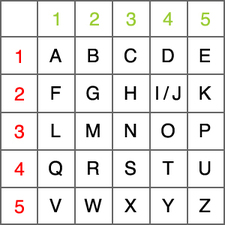
> Polybius square, also known as the Polybius checkerboard, is a device invented by the Ancient Greekhistorian and scholar Polybius, for fractionating plaintext characters so that they can be represented by a smaller set of symbols.

(Note: create a table of any size, readings should start in column then row)

Example:5×5

 A B C D E

A|A|B|C|D|E

B|F|G|H|J|K

C|L|M|N|O|P

D|Q|R|S|T|U

E|V|W|X|Y|Z

Ciphertext: CB CD CC BD AA ED

Plaintext: M O N D A Y

VIGENERE CIPHER

Type: Substitution

(Note: keywords sets at the starting point of alphabet and keyword shoud be inserted in the first column of the table mot in the row, keyword shoud be repeated until it reach the same value or no. of the text )

Example:

Plaintext: JUPITER

Keyword: mapsmap

(See vigenere table)

Ciphertext: VUEAFEG

HITMAN CIPHER

If A is A then N is N.

A~A

B~Z

C~Y

D~X

E~W

F~V

G~U

H~T

I~S

J~R

K~Q

L~P

M~O

N~N

Example

Ciphertext: TSHOAN

Plaintext: HITMAN

BIFID CIPHER

Type: Substitution

CIPHER: First column and firs row contains numbers while the rest is letters) 5×5

Example:

1 2 3 4 5

1|A|B|C|D|E|

2|F|G|H| I |K|

3|L|M|N|O|P|

4|Q|R|S|T|U|

5|V|W|X|Y|Z|

Ciphertext: 3,2 3,4 3,3 4,3 4,4 1,5 4,2 or

Ciphertext: 32 34 33 43 44 15 42

Plaintext: MONSTER

TAP CODE

type: Substitution

A(. .)

B(. ..)

C(. …)

D(. ….)

E (. …..)

F (.. .)

G(.. ..)

H(.. …)

I(.. ….)

J(.. …..)

K(. …)

L(… .)

M(… ..)

N(… …)

O(… ….)

P(… …..)

Q(…. .)

R(…. ..)

S(…. …)

T(…. ….)

U(…. …..)

V(….. .)

W(….. ..)

X(….. …)

Y(….. ….)

Z(….. …..)

*space* (null)

DOT DOT CODES

A(°••••)

B(•°•••)

C(••°••)

D(•••°•)

E(••••°)

F(•°°°°)

G(°•°°°)

H(°°•°°)

I(°°°•°)

J(°°°°•)

K(°•°•°)

L(•°•°•)

M(••°°°°)

N(°°••°°)

O(°°°°••)

P(°°••••)

Q(••°°••)

R(••••°°)

S(•°•°°)

T(°•°°•)

U(•°°•°)

V(°°•°•)

W(°•°••)

X(•°••°)

Y(°••°•)

Z(••°•°)

NEWS CIPHER

(Note: make a table of letters, whether theres a keyword or none, 5×5 from A to Z, where C/K and I/J are interchangeable.)

Legends:

N ~ North

E ~ East

W ~ West

S ~ South

NE ~ North East

NW ~ North West

SE ~ South East

SW ~ South West

A | B | C | D | E

F | G | H | I | J

L | M| N | O | P

Q | R | S | T | U

V | W| X | Y | Z

Example:
Ciphertext: NWFNVNEDSBWISWFN

N(W) F(N) V(NE) D(S) B(W) I(SW) F(N)

Plaintext: MARIANA

CROSS CODE

A ~ †††

B ~ +††

C ~ †+†

D ~ ††+

E ~ †++

F ~ +†+

G ~ ++†

H ~ ࠠ

I ~ †‡†

J ~ ††‡

K ~ ‡++

L ~ +‡+

M ~ ++‡

N ~ †‡‡

O ~ ‡†‡

P ~ ‡‡†

Q ~ +‡‡

R ~ ‡+‡

S ~ ‡‡+

T ~ ‡†+

U ~ †+‡

V ~ +‡†

W ~ ‡+†

X ~ +†‡

Y ~ †‡+

Z ~ +++

ARROW CODES

(Note: Create a table of letters 5×5 either theres a keyword or none, and moves starts after the first given letter)

Legends: ←↑↓→

Moves: ¹ ² ³ ⁴

/-separates each letters

A | B | C | D | E

F | G | H | I | J

L | M| N | O | P

Q | R | S | T | U

V | W| X | Y | Z

Example:

Codex: P/ ←⁴↑²/ →²↓²/ →¹↑²/ ↓²/ ←²↓¹/ ←¹↑³/

Plaintext: PANDORA

*note: follow the arrow

From Heartstopper Necrolyte

—Nihilist Cipher—

//This cipher was developed and used by Russian nihilists to communicate with allies during a particular war.//

First, is kelangan mo munang gumawa ng polybius square.

°| 1 2 3 4 5
———————–

1| A B C D E

2| F G H I J

3| K L M N O

4| P R S T U

5| V W X Y Z

Then, pumili ka ng secret word. Ang example ko is MIX.. Then I write out mo ito ng paulit ulit sa message mo sa baba into. For example ang message naten is GIVE IT TO ME.

GIVEITTOME

MIXMIXMIXM

Then base sa polybius square, i coconvert mo sila into numbers.

22 24 51 15 24 44 44 35 33 15

33 24 53 33 24 53 33 24 53 33

And lastly, para maencrypt is iaadd mo lang sila.

Final encrypted message is…

55 48 104 48 48 97 77 59 86 48

Gets?

Decode this using the secret word FISH.

73 35 75 34 55 46 64 58 63 39 94 38 63

—CLOCK CIPHER—

From France Bayongasan

Sa gustong matuto ng clock cipher ito na po

Clock cipher

Am=A

1=B

2=C

3=D

4=E

5=F

6=G

7=H

8=I

9=J

10=K

11=L

12=M

13=N

14=O

15=P

16=Q

17=R

18=S

19=T

20=U

21=V

22=W

23=X

24=Y

Pm=Z

00=SPACE

—From Markjoseph Kish—

Para mas lalo nyong maintindihan ang Binary Clock kailangan gumawa ng table(4 pababa,2 pahalang pero tatlong chart) parang ganito

8 °° | °° | °°

4 °° | °° | °°

2 °° | °° | °°

1 °° | °° | °°

Ganyan ang gagawin

°(di nailaw)

•(nailaw)

Kung ano lang yung nailaw ayun lang ang bibilangin nyo…

Tulad nito

°°|°°|°°

°°|°°|°°

°•|•°|°°

°•|•°|°°

=03:30:00

Kapag double ang ilaw sa isang line ay iaadd nyo lang

Credits to my Bos (JB)
Compilation (2)

CEASAR SHIFT / GRONSFELD CIPHER

Type: Substitution

> ceasar cipher or gronsfeld cipher is a type of encryption to which associated a shift of a fixed number of a letter (towards left or right). Each letter is then relaced by that obtained after performing the shift.

(Note: encoding or decoding depends on the number of shift)

Encrypt-shift forward

Decrypt-shift backward

Example:

Shift: 3

1.)LOVE

encrypted=ORYH

decrypted=ILSB

2.) JUHDW

encrypted=MXKGZ

decrypted=GREAT

CAESAR’S BOX

Example:
HBDY-AIAO-PRYU-PTT-YHO

(Note: arrange it like stack and read by column from top to bottom)

Stack form:

HBDY

AIAO

PRYU

PTT

YHO

Answer = HAPPY BIRTHDAY TO YOU

VANITY CODE

Type: Substitution

Keypad keys:

1=.,

2=abc

3=def

4=ghi

5=jkl

6=mno

7=pqrs

8=tuv

9=wxyz

0=space

Example:

356937 = flower

6676464 = morning
MORSE CODE

Type: Trasposition

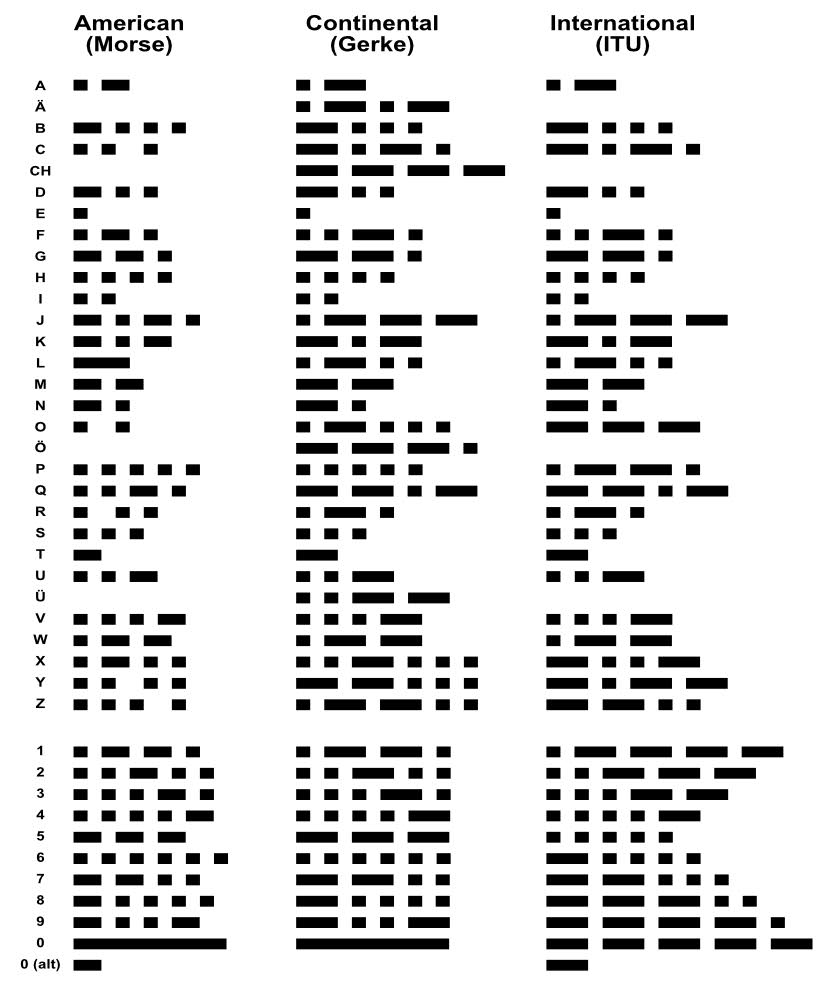
> morse code is a system to encode thanks to short and long impulses. Each letter or punctuation mark is associated with a sequence of signals. These signals are translated to the following characters:

Dot(.) is the elementary pulse

Comma(,) represents pulse three times longer than the point

Space( ) represent separation between two letters

Vergule(/) represents separation between words

A= .-

B= -…

C= -.-.

D= -..

E= .

F= ..-.

G= –.

Η= ….

I= ..

J= .—

K= -.-

L= .-..

M= —

N= -.

O= —

P= .–.

Q= –.-

R= .-.

S= …

T= –

U= ..-

V= …-

W= .–

X= -..-

Y= -.–

Z= –..

Example:

-.-. — -. -.. .. – .. — -. = CONDITION

KEYWORD CIPHER

Type: Substitution

(Note: encoding or decoding is based on the keyword input)

(Note: keyword given will be inserted as first in the sequence of alphabet and letters should never repeat)

Example

Keyword: GOD

A=G N=M

B=O O=N

C=D P=P

D=A Q=Q

E=B R=R

F=C S=S

G=E T=T

H=F U=U

I=H V=V

J=I W=W

K=J X=X

L=K Y=Y

M=L Z=Z

Cipher: JMNW = KNOW

ROT 13

> ROT13 (“rotate by 13 places”, sometimes hyphenated ROT-13) is a simple letter substitution cipher that replaces a letter with the letter 13 letters after it in the alphabet.

Type:

A=Z

B=Y

C=X

D=W

E=V

F=U

G=T

H=S

I=R

J=Q

K=P

L=O

M=N

BACON CIPHER

Type: Substitution

> To encode a message, each letter of the plaintext is replaced by a group of five of the letters ‘A’ or ‘B’. This replacement is a binary encoding and is done according to the alphabet of the Baconian cipher.

A=AAAAA

B=AAAAB

C=AAABA

D=AAABB

E=AABAA

F=AABAB

G=AABBA

H=AABBB

I/J=ABAAA

K=

ABABA

L=ABABB

M=ABBAA

N=ABBAB

O=ABBBA

P=ABBBB

Q=BAAAA

R=BAAAB

S=BAABA

T=BAABB

U/V=BABAA

W=BABBA

X=BABBB

Y=BBAAA

Z=BBAAB

REVERSE CIPHER

Types: Words

> two modes are available in this code. First reverses the whole text, second reverses letters word by word.

Example:

1st mode

1.) NEGYXO = OXYGEN

2.) YRANOITCID = DICTIONARY

3.)1ST: REKEES NOITNETTA = ATTENTION SEEKER

4.)2nd: NOITNETTA REKEES = ATTENTION SEEKER

PLAYFAIR

Type: Substitution

> playfair cipher uses an array of 5×5 containing a keyword or phrase. The first step is to create a grid based on the key. The second step is to encrypt the letters of the message by selecting them in pairs.

Key: melons

(Note: grid size is 5×5 and i/j can interchange)

M|E|L|O|N

S|A|B|C|D

F|G|H|I |K

P|Q|R|T|U

V|W|X|Y|Z

Plaintext: VALENTINES

VA LE NT IN ES

Ciphertext: WSOLOUJOMA

WS OL OU JO MA

Credits to him (JB)

Compilation (1)

CIPHERS & CODES

CRYPTOGRAPHY

CIPHER LIST

ASCII

Type: Substitution

—Binary—

A-01000001

B-01000010

C-01000011

D-01000100

E-01000101

F-01000110

G-01000111

H-01001000

I-01001001

J-01001010

K-01001011

L-01001100

M-01001101

N-01001110

O-01001111

P-01010000

Q-01010001

R-01010010

S-01010011

T-01010100

U-01010101

V-01010110

W-01010111

X-01011000

Y-01011001

Z-01011010

a-01100001

b-01100010

c-01100011

d-01100100

e-01100101

f-01100110

g-01100111

h-01101000

i-01101001

j-01101010

k-01101011

l-01101100

m-01101101

n-01101110

o-01101111

p-01110000

q-01110001

r-01110010

s-01110011

t-01110100

u-01110101

v-01110110

w-01110111

x-01111000

y-01111001

z-01111010
‘space’-00100000

1-1

2-10

3-11

4-100

5-101

6-110

7-111

8-1000

9-1001

0-0

—Decimal—

A-65

B-66

C-67

D-68

E-69

F-70

G-71

H-72

I-73

J-74

K-75

L-76

M-77

N-78

O-79

P-80

Q-81

R-82

S-83

T-84

U-85

V-86

W-87

X-88

Y-89

Z-90

a-97

b-98

c-99

d-100

e-101

f-102

g-103

h-104

i-105

j-106

k-107

l-108

m-109

n-110

o-111

p-112

q-113

r-114

s-115

t-116

u-117

v-118

w-119

x-120

y-121

z-122

—Hexadecimal-

A-41

B-42

C-43

D-44

E-45

F-46

G-47

H-48

I-49

J-4A

K-4B

L-4C

M-4D

N-4E

O-4F

P-50

Q-51

R-52

S-53

T-54

U-55

V-56

W-57

X-58

Y-59

Z-5A

a-61

b-62

c-63

d-64

e-65

f-66

g-67

h-68

i-69

j-6A

k-6B

l-6C

m-6D

n-6E

o-6F

p-70

q-71

r-72

s-73

t-74

u-75

v-76

w-77

x-78

y-79

z-7A

—Octal—

A-101

B-102

C-103

D-104

E-105

F-106

G-107

H-110

I-111

J-112

K-113

L-114

M-115

N-116

O-117

P-120

Q-121

R-122

S-123

T-124

U-125

V-126

W-127

X-130

Y-131

Z-132

a-141

b-142

c-143

d-144

e-145

f-146

g-147

h-150

i-151

j-152

k-153

l-154

m-155

n-156

o-157

p-160

q-161

r-162

s-163

t-164

u-165

v-166

w-167

x-170

y-171

z-172

LATIN CODE

Type: Numbers

> latin alphabet consist of 26 letters. A position in the alphabet is assigned to each letter. The 1 position for example is assigned to letter a.

A=01 N=14

B=02 O=15

C=03 P=16

D=04 Q=17

E=05 R=18

F=06 S=19

G=07 T=20

H=08 U=21

I =09 V=A

J=10 W=23

K=11 X=24

L=12 Y=25

M=13 Z=26

ATBASH

Type: Substitution

> atbash is a type of substitution cipher in which the first letter (a) is substituted to the last letter (z), second letter(b) is substituted to penultimate
, and so on.

A=Z

B=Y

C=X

D=W

E=V

F=U

G=T

H=S

I=R

J=Q

K=P

L=O

M=N

Credits to my friend JB

Block Cipher

ctto


I’m somebody who likes codes and ciphers and chases and artwork and architecture, and all the things you find in a Robert Langdon thriller. 

Dan Brown


Read more at: https://www.brainyquote.com/topics/codes

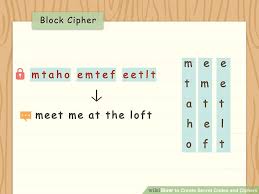
In cryptography, a block cipher is a deterministic algorithm operating on fixed-length groups of bits, called a block, with an unvarying transformation that is specified by a symmetric key. Block ciphers operate as important elementary components in the design of many cryptographic protocols, and are widely used to implement encryption of bulk data.

The modern design of block ciphers is based on the concept of an iterated product cipher. In his seminal 1949 publication, Communication Theory of Secrecy SystemsClaude Shannon analyzed product ciphers and suggested them as a means of effectively improving security by combining simple operations such as substitutions and permutations.[1] Iterated product ciphers carry out encryption in multiple rounds, each of which uses a different subkey derived from the original key. One widespread implementation of such ciphers, named a Feistel network after Horst Feistel, is notably implemented in the DES cipher.[2] Many other realizations of block ciphers, such as the AES, are classified as substitution–permutation networks.[3]

The publication of the DES cipher by the United States National Bureau of Standards (subsequently the U.S. National Institute of Standards and Technology, NIST) in 1977 was fundamental in the public understanding of modern block cipher design. It also influenced the academic development of cryptanalytic attacks. Both differential and linear cryptanalysis arose out of studies on the DES design. As of 2016 there is a palette of attack techniques against which a block cipher must be secure, in addition to being robust against brute-force attacks.

Even a secure block cipher is suitable only for the encryption of a single block under a fixed key. A multitude of modes of operation have been designed to allow their repeated use in a secure way, commonly to achieve the security goals of confidentiality and authenticity. However, block ciphers may also feature as building blocks in other cryptographic protocols, such as universal hash functions and pseudo-random number generators.

Transposition Cipher

ctto


The origin of each of us stems from codes of genetic inheritance. 


John Eccles


Read more at: https://www.brainyquote.com/topics/codes

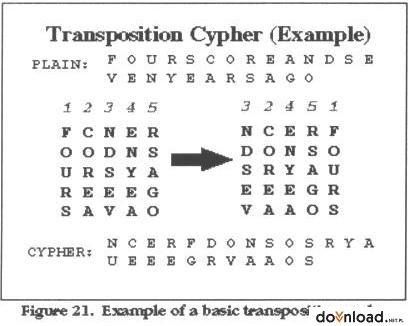
The letters or words of the plaintext are reordered in some way, fixed by a given rule (the key). One example of a transposition cipher, is to reverse the order of the letters in a plaintext. … Another type of transposition cipher is the Scytale, which was an encryption device used by the Ancient Greeks and Spartans.

In cryptography , a transposition cipher is a method of encryption by which the positions held by units of plaintext (which are commonly characters or groups of characters) are shifted according to a regular system, so that the ciphertext constitutes a permutation of the plaintext. That is, the order of the units is changed (the plaintext is reordered). Mathematically a bijective function is used on the characters’ positions to encrypt and an inverse function to decrypt. 

Polybius Square

ctto


I think if you work with different kinds of codes, attitudes, in the end you have a language. It’s like within a person. You are not always the same.

Alessandro Michele


Read more at: https://www.brainyquote.com/topics/codes

In cryptography, the Polybius square, also known as the Polybius checkerboard, is a device invented by the Ancient Greeks Cleoxenus and Democleitus, and perfected by the Ancient Greek historian and scholar Polybius,[1] for fractionating plaintext characters so that they can be represented by a smaller set of symbols.

Polybius did not originally conceive of his device as a cipher so much as an aid to telegraphy; he suggested the symbols could be signalled by holding up pairs of sets of torches. It has also been used, in the form of the “knock code” to signal messages between cells in prisons by tapping the numbers on pipes or walls. It is said to have been used by nihilist prisoners of the Russian Czars and also by US prisoners of war during the Vietnam War.

Arthur Koestler describes the code being used by political prisoners of Stalin in the 1930s in his anti-totalitarian novel Darkness at Noon. (Koestler had been a prisoner-of-war during the Spanish Civil War.) Indeed, it can be signalled in many simple ways (flashing lamps, blasts of sound, drumssmoke signals) and is much easier to learn than more sophisticated codes like the Morse code. However, it is also somewhat less efficient than more complex codes.

The simple representation also lends itself to steganography. The figures from one to five can be indicated by knots in a string, stitches on a quilt, contiguous letters before a wider space or many other ways.


I1: Samuel Morse

ctto

olenus's avatarDescendants of haplogroup IJ-M429

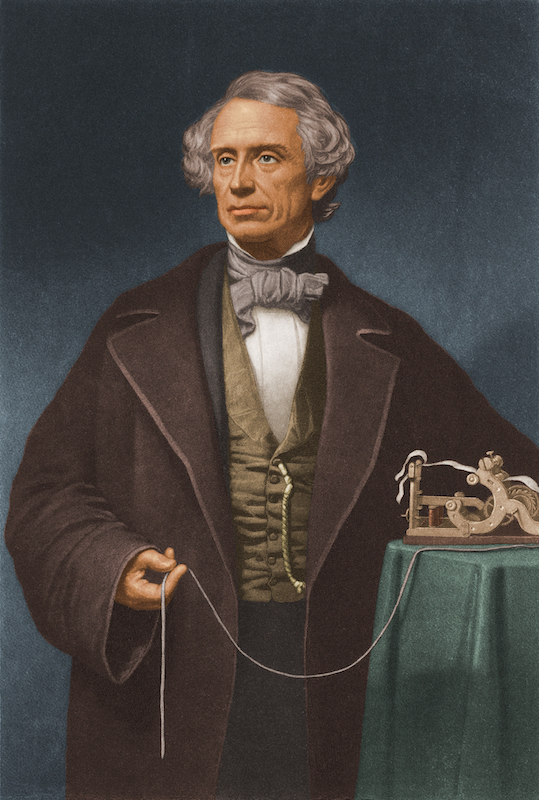
Samuel Morse With Telegraph

Samuel Finley Breese Morse, OIC (April 27, 1791 – April 2, 1872) was an American painter and inventor. After having established his reputation as a portrait painter, in his middle age Morse contributed to the invention of a single-wire telegraph system based on European telegraphs. He was a co-developer of the Morse code and helped to develop the commercial use of telegraphy.

Wikipedia: Samuel Morse

Invention of Morse-code and Telegraph

Sources:  The Morse Society, Morse FTDNA-project, Anthony Morse-Geni

morse

View original post